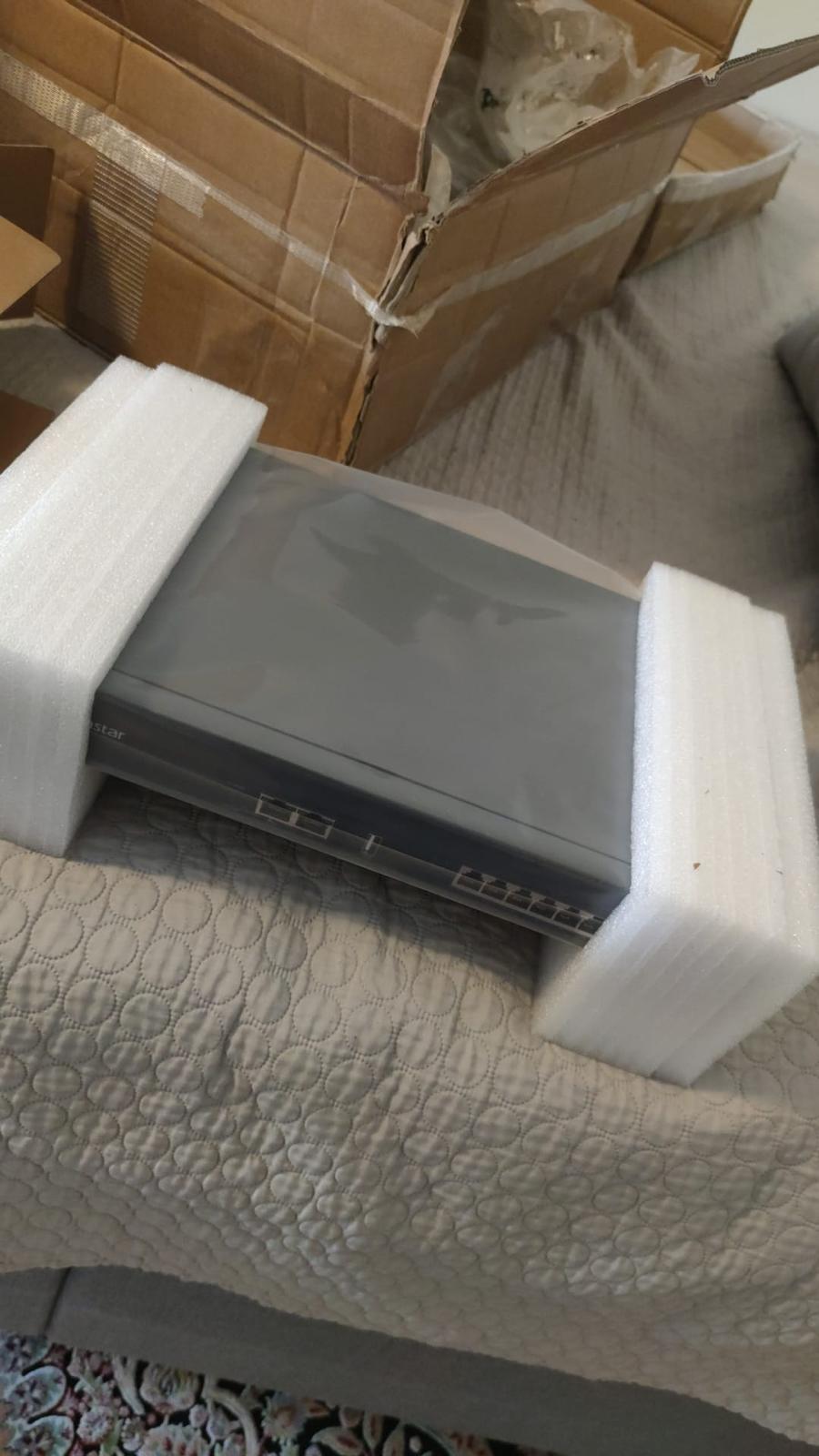

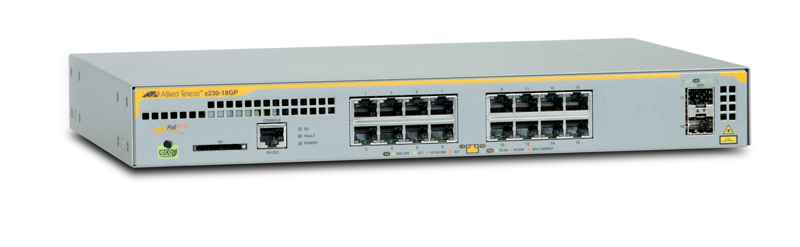
Allied Telesis AT x230-18GP - L2+ Switch Managed

 NOTE: The information below is provided for your convenience only; the accuracy of the specifications cannot be guaranteed. However, if necessary, please check with us before purchasing. Data provided by 1 World Sync.
General
Switch type
Managed
Switch layer
L2+
Basic switching RJ-45 Ethernet ports type
Gigabit Ethernet (10/100/1000)
Basic switching RJ-45 Ethernet ports quantity
16
Console port
RJ-45
Full duplex
Y
MAC address table
16000 entries
Switching capacity
36.6 Gbit/s
Networking standards
IEEE 802.2,IEEE 802.3,IEEE 802.3ab,IEEE 802.3ad,IEEE 802.3af,IEEE 802.3at,IEEE 802.3az,IEEE 802.3u,IEEE 802.3x,IEEE 802.3z
Power connector
DC-in jack
Power over Ethernet (PoE)
Y
Rack mounting
Y
Allied Telesis AT-x230-18GP-50. Switch type: Managed, Switch layer: L2+. Basic switching RJ-45 Ethernet ports type: Gigabit Ethernet (10/100/1000), Basic switching RJ-45 Ethernet ports quantity: 16, Console port: RJ-45. Full duplex. MAC address table: 16000 entries, Switching capacity: 36.6 Gbit/s. Networking standards: IEEE 802.2,IEEE 802.3,IEEE 802.3ab,IEEE 802.3ad,IEEE 802.3af,IEEE 802.3at,IEEE 802.3az,IEEE.... Power connector: DC-in jack. Power over Ethernet (PoE). Rack mounting
The Allied Telesis x230-18GP features 16 x 10/100/1000T PoE+ ports with 2 SFP Gigabit uplink ports. A full feature-set with Power over Ethernet Plus makes it ideal for applications at the network edge, supporting the growth of wireless networking and digital video surveillance.
- Allied Telesis Management Framework (AMF)
- Ethernet Protection Switched Ring (EPSRing)
- Access Control Lists (ACLs)
- Storm protection
- Loop protection
- Spanning Tree Protocol (STP) Root Guard
- Bridge Protocol Data Unit (BPDU) protection
- Tri-authentication
- Dynamic Host Configuration Protocol (DHCP) snooping
- Strong passwords
- Link aggregation
- Voice VLAN
- Find Me
- Allied Telesis Management Framework (AMF)
Based on Software-Defined Networking (SDN) principles, AMF is an embedded technology native to Allied Telesis switches that delivers real and immediate value to businesses. - Ethernet Protection Switched Ring (EPSRing)
Allied Telesis EPSRing solutions provide high performance, high reliability, flexible, scalable distributed network cores. The core can be as small or as large as is needed, connected by copper or fiber, or even copper and fiber in the same ring. The core bandwidth can be anything from 100Mbps to multiples of 10Gbps. The recovery time when links or nodes go down is extremely fast - as low as 50 ms, making this solution ideal for the provision of converged voice, video and data services. - Access Control Lists (ACLs)
The x230-GP Series features industry-standard access control functionality through ACLs. ACLs filter network traffic to control whether packets are forwarded or blocked at the port interface. This provides a powerful network security mechanism to select the types of traffic to be analyzed, forwarded, or influenced in some way. An example of this would be to provide traffic flow control. - Storm protection
Advanced packet storm control features protect the network from broadcast storms. Bandwidth limiting minimizes the effects of the storm by reducing the amount of flooding traffic. Policy-based storm protection is more powerful than bandwidth limiting. It restricts storm damage to within the storming VLAN, and it provides the flexibility to define the traffic rate that creates a broadcast storm. The action the device should take when it detects a storm can be configured, such as disabling the port from the VLAN or shutting the port down. Packet storm protection allows limits to be set on the broadcast reception rate, multicast frames and destination lookup failures. In addition, separate limits can be set to specify when the device will discard each of the different packet types. - Loop protection
Thrash limiting, also known as Rapid MAC movement, detects and resolves network loops. It is highly user-configurable - from the rate of looping traffic to the type of action the switch should take when it detects a loop. With thrash limiting, the switch only detects a loop when a storm has occurred, which can potentially cause disruption to the network. To avoid this, loop detection works in conjunction with thrash limiting to send special packets, called Loop Detection Frames (LDF), that the switch listens for. If a port receives an LDF packet, one can choose to disable the port, disable the link, or send an SNMP trap. - Spanning Tree Protocol (STP) Root Guard
STP root guard designates which devices can assume the root bridge role in an STP network. This stops an undesirable device from taking over this role, where it could either compromise network performance or cause a security weakness. - Bridge Protocol Data Unit (BPDU) protection
BPDU protection adds extra security to STP. It protects the spanning tree configuration by preventing malicious Dos attacks caused by spoofed BPDUs. If a BPDU packet is received on a protected port, the BPDU protection feature disables the port and alerts the network manager. - Tri-authentication
Authentication options on the x230-GP Series include alternatives to 802.1x port-based authentication, such as web authentication, to enable guest access and MAC authentication for end points that do not have an 802.1x supplicant. All three authentication methods - 802.1x, MAC-based and Web-based - can be enabled simultaneously on the same port, resulting in tri-authentication. - Dynamic Host Configuration Protocol (DHCP) snooping
DHCP servers allocate IP addresses to clients, and the switch keeps a record of addresses issued on each port. IP source guard checks this against the DHCP snooping database to ensure only clients with specific IP and/or MAC addresses can access the network. Combining DHCP snooping with other features, like dynamic ARP inspection, increases security in Layer 2 switched environments. This also provides a traceable history, which meets the growing legal requirements placed on service providers. - Strong passwords
Enforcing strong passwords for key networking equipment users allows network administrators to increase security, and ensure a robust and reliable infrastructure. - Link aggregation
Link aggregation allows a number of individual switch ports to be combined, forming a single logical connection of higher bandwidth. This provides a higher performance link, and also provides redundancy for a more reliable and robust network. - Voice VLAN
Voice VLAN automatically separates voice and data traffic into two different VLANs. This automatic separation places delay-sensitive traffic into a voice dedicated VLAN, simplifying Quality of Service (QoS) configuration. - Find Me
In busy server rooms comprised of a large number of equipment racks, it can be quite a job finding the correct switch quickly among many similar units. The "Find Me" feature is a simple visual way to quickly identify the desired physical switch for maintenance or other purposes, by causing its LEDs to flash in a specified pattern.
| Estimate Gross Weight | 4.244 |
|---|
The Allied Telesis x230-18GP features 16 x 10/100/1000T PoE+ ports with 2 SFP Gigabit uplink ports. A full feature-set with Power over Ethernet Plus (PoE+) makes it ideal for applications at the network edge, supporting the growth of wireless networking and digital video surveillance.
Inside NetworkDistri
From our network to yours.
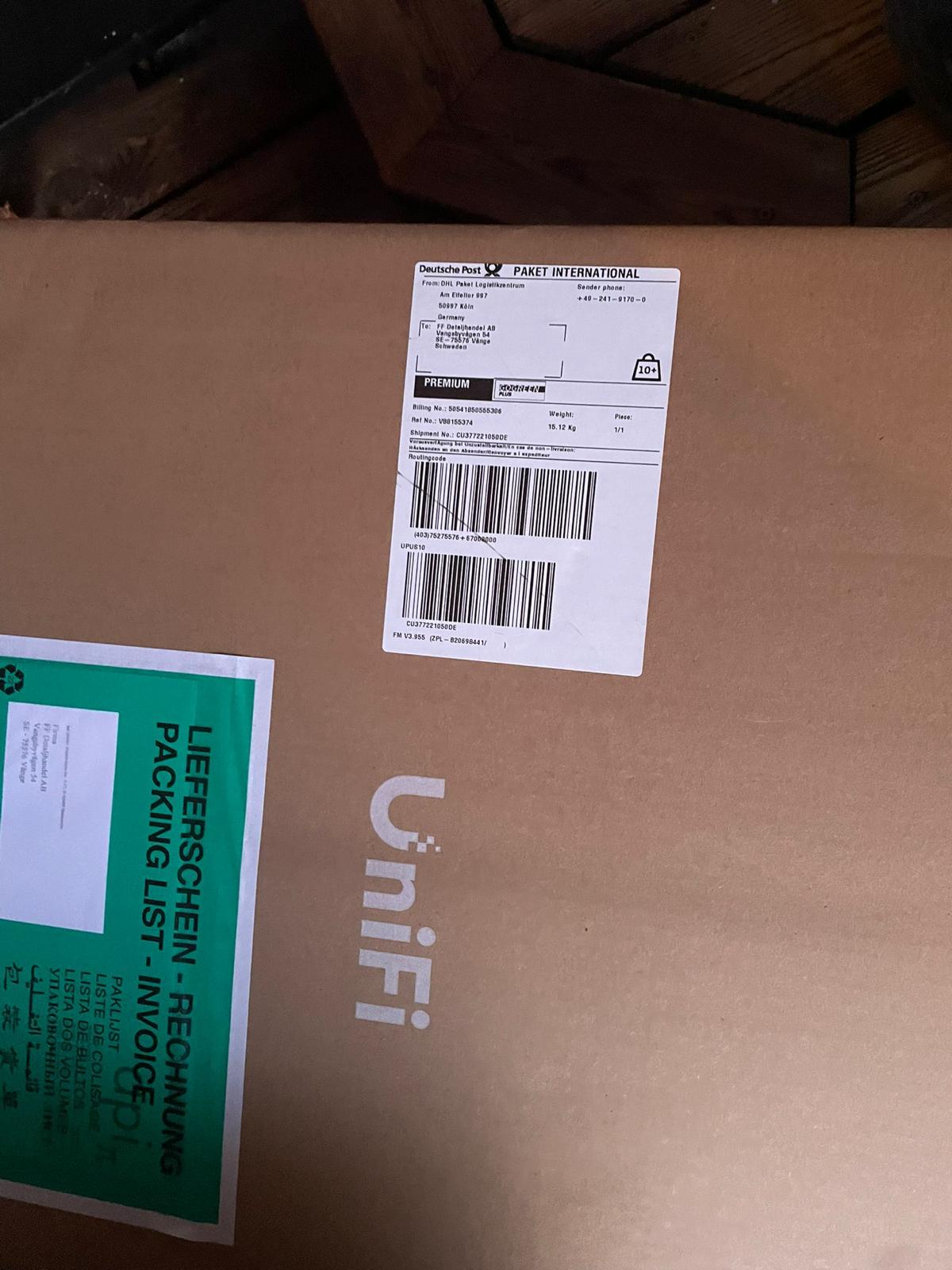
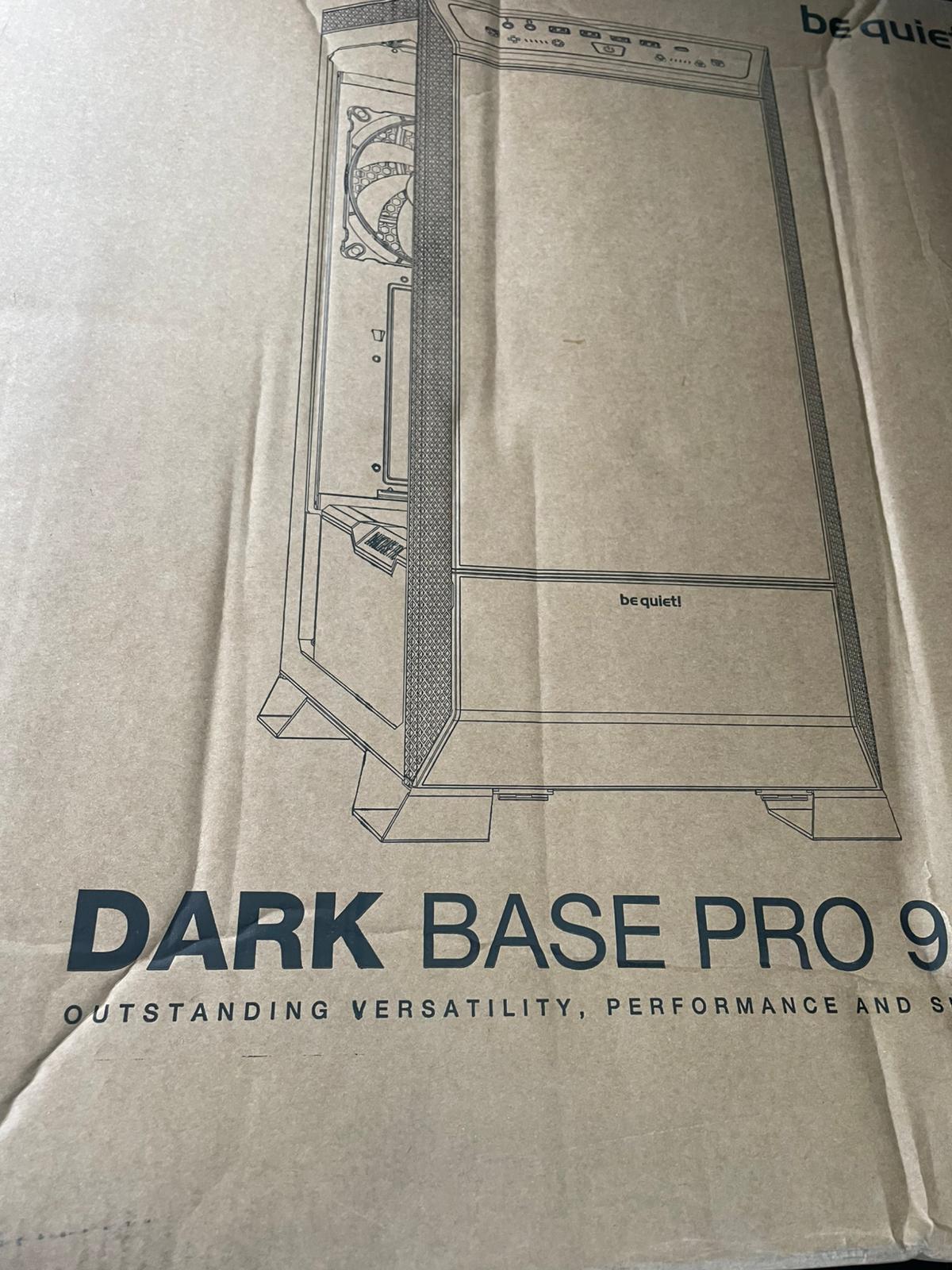
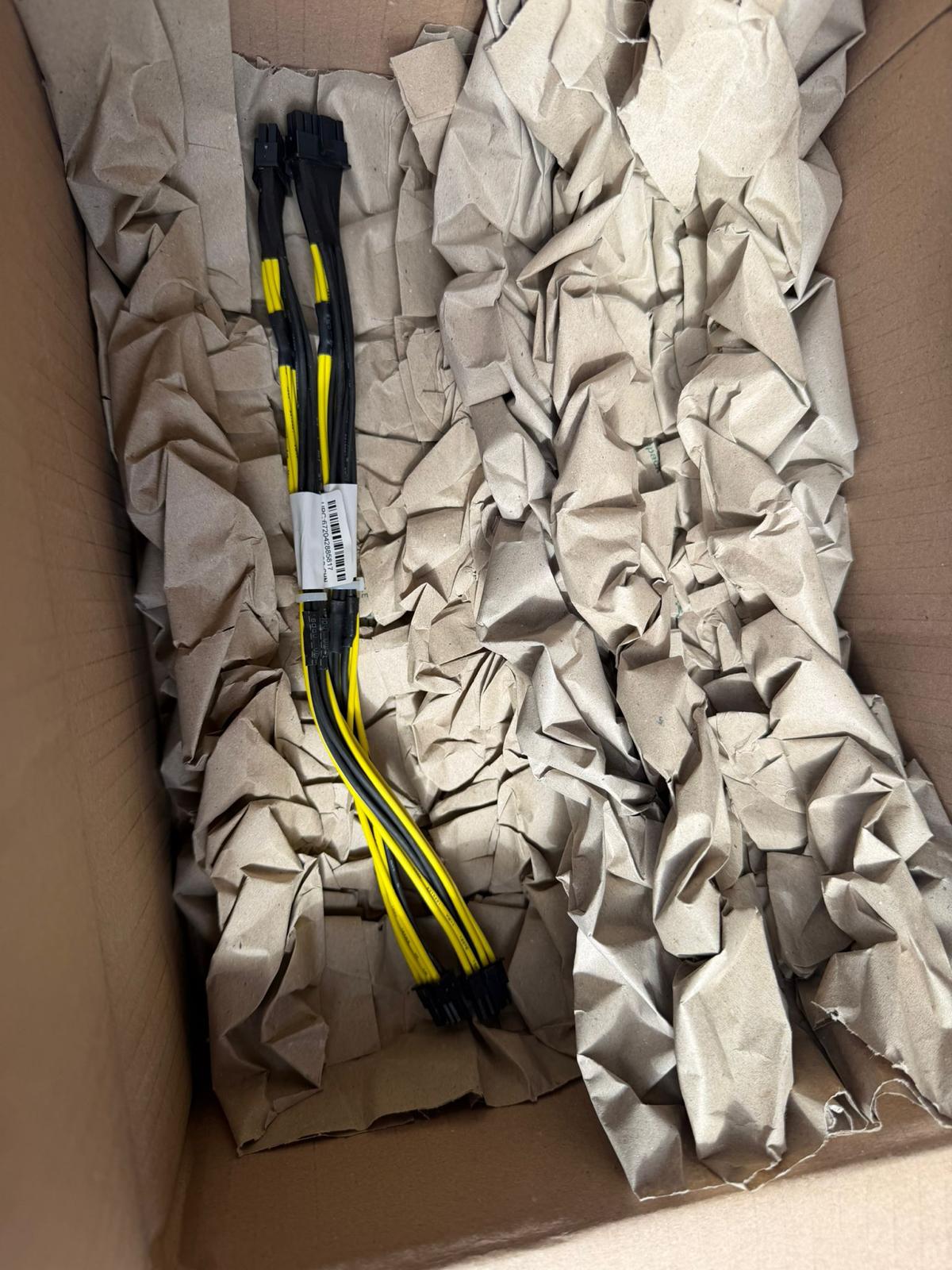
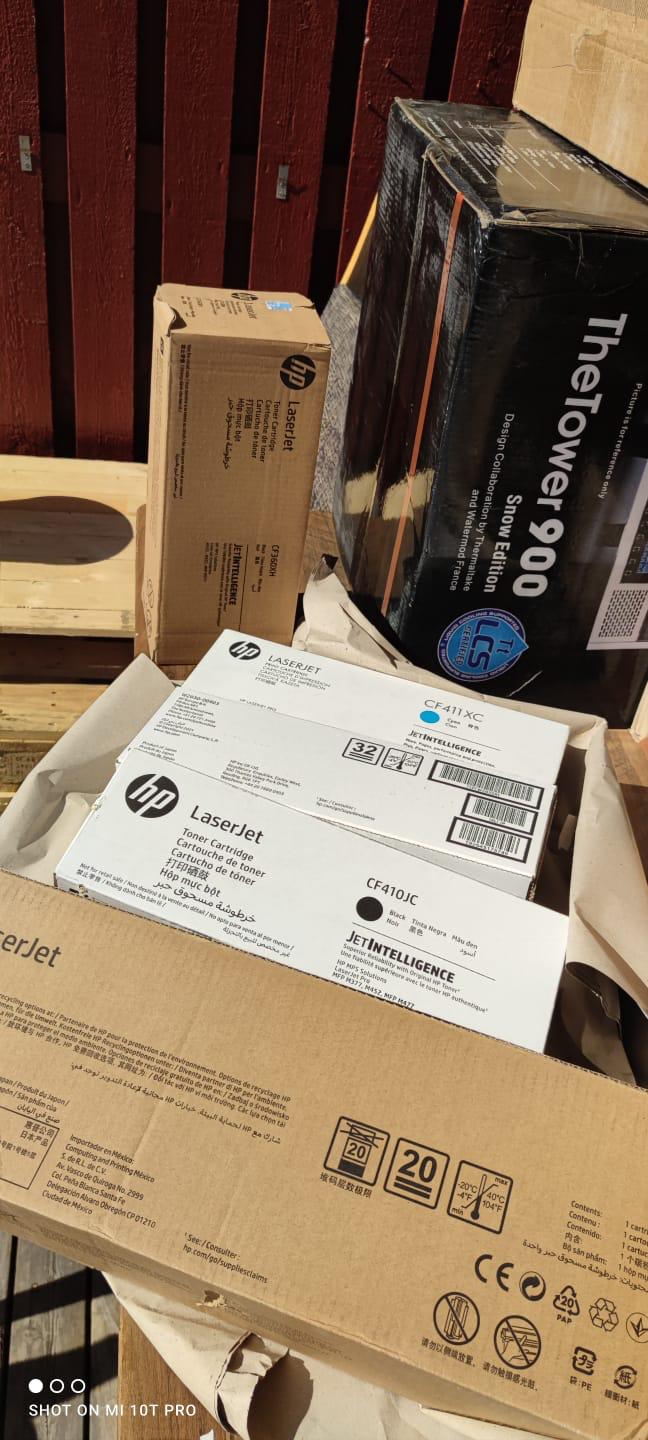
Every day, technology moves through our operation — received, checked, prepared and dispatched to customers. The images below show real equipment handled through our operation, not stock photography.